

Omnichannel inventory management: what it is and best practices
Customers now expect the same experience everywhere they shop, whether that’s on your website, on an online marketplace, or in your physical store. If your stock levels don’t match across all three, you can’t meet that expectation.
This guide covers what omnichannel inventory management actually is, why it matters, the biggest challenges retailers hit, and the practices that make it work.
Inventory management savings calculator
What is the current cost of your mis-ships, out of stocks and lack of labor efficiency?
What is omnichannel inventory management?
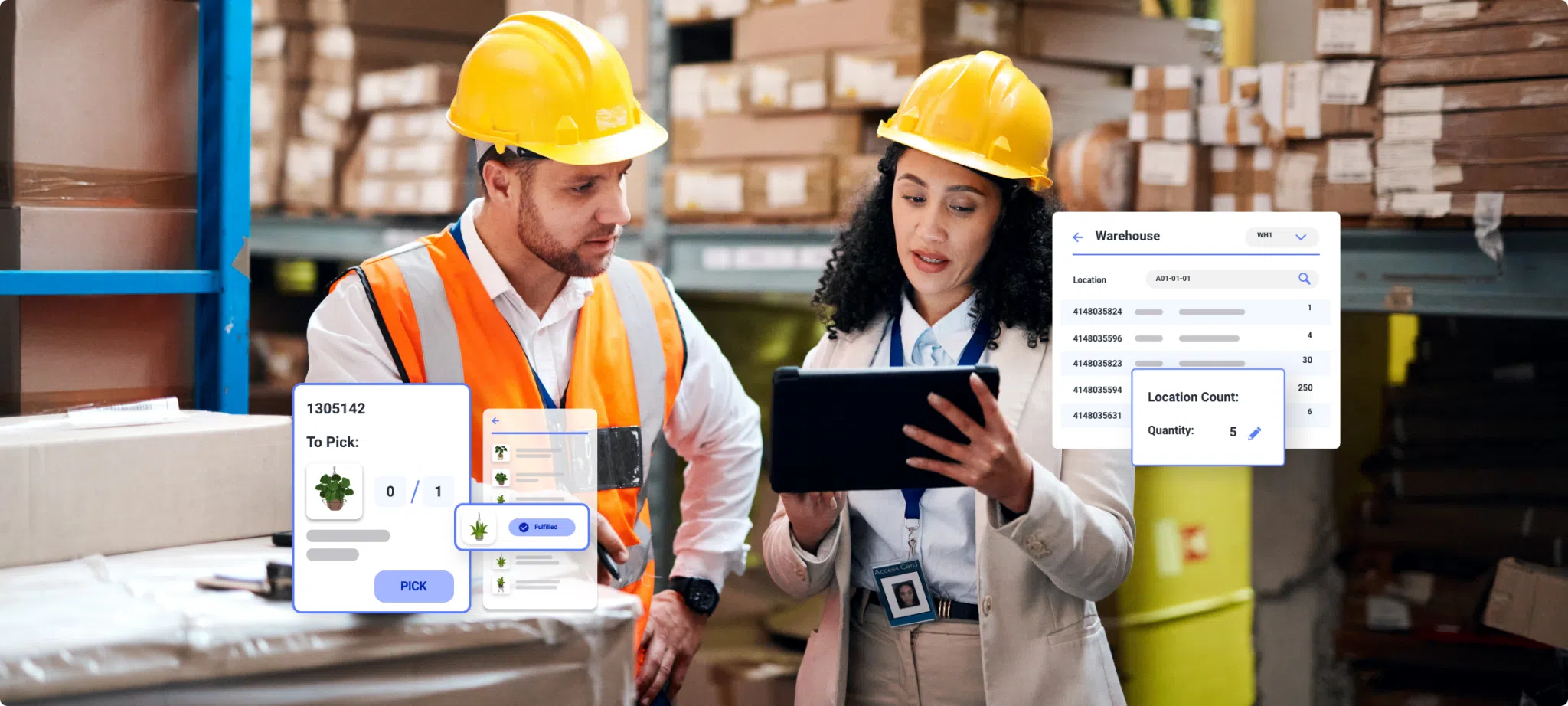
Omnichannel inventory management is the practice of tracking stock levels across every sales channel (online stores and marketplaces, and physical locations) from a single central system to keep stock counts accurate everywhere at once.
This gives retailers one accurate view of inventory regardless of where a product sells. It also improves order fulfillment accuracy, since every order is checked against one shared stock count instead of separate, channel-by-channel numbers.
Master your marketplace strategy: A guide to success
Expand into international marketplaces with confidence. This guide helps you choose the right strategy to scale successfully and reach global customers.

Omnichannel vs. multichannel: what’s the difference?
Technically, multichannel means selling through multiple channels, while omnichannel means selling through every channel a customer might use. In practice, the terms are used interchangeably.
The distinction that actually matters isn’t the label. It’s whether your inventory system treats each channel as separate or gives you one connected view across all of them.
Why omnichannel inventory management matters
A shopper buys a product from your website, but when you go to fulfil it, you find the last unit has already sold on eBay. That mismatch costs sales and erodes trust. Omnichannel inventory management exists to prevent exactly this.
Key benefits of omnichannel inventory management
- Fewer stockouts and less overselling. Inventory updates across all channels at the same time, so customers consistently find what’s actually available.
- Lower operational costs. Automated inventory tracking and fulfillment cuts manual work and reduces errors. It also keeps storage costs down, helping you maintain the right stock levels to meet demand.
- More sales captured. Better stock availability and fulfillment accuracy mean fewer missed orders.
The sustainability case for omnichannel inventory management
Beyond the obvious business benefits, centralized inventory has environmental upsides:
- Less waste. Better visibility means less overstocking and fewer unsold goods, since demand forecasting keeps stock aligned with actual demand.
- More efficient logistics. Centralized systems support consolidated shipping, which can reduce unnecessary transportation and emissions.
- Lower energy use in operations. Automation reduces reliance on energy-intensive manual processes in warehouses and fulfillment centers.
- Better product lifecycle management. Understanding demand patterns and managing returns well lets businesses redirect or refurbish items instead of discarding them.
And sustainable business practices feed back into the bottom line. A survey by Nielsen found that 73% of global consumers say they would change their consumption habits to reduce environmental impact.
Who does omnichannel inventory management well
Two Linnworks customers show what this looks like in practice:
- Hughes Electricals, the UK’s largest domestic appliance renter, manages 18 physical stores and three websites, alongside Amazon, eBay, and insurance-replacement partnerships. They handle inventory across every channel from a single stock level, so the business can trial new marketplaces without losing track of what’s actually available.
- Direct Plants ran as a physical nursery for over 20 years before expanding to eBay, an Amazon store, and a direct-to-consumer website. It now manages 10,000 SKUs, up to 1,000 of them in season at once, across every channel from one system. That lets them keep a perishable, seasonal product line from being over- or under-sold.
When we surveyed 500 mid-market retailers, 89% reported moderate to significant year-over-year growth. The fastest-growing retailers shared three traits: a broader multichannel footprint, higher automation, and greater confidence in their ability to scale further. Inventory visibility, meanwhile, was the clearest bottleneck: most retailers said they don’t yet have it.
Common omnichannel inventory management challenges
Outdated technology
Many retailers still run on spreadsheets or legacy software without live stock visibility.
Disconnected supply chains
Data from every link in the chain, from vendors and manufacturers to logistics providers, needs to feed into a central system.
Lack of inventory visibility
If you can’t see current stock levels, you can’t manage them. This is usually the root cause of overselling and lost sales. It’s also more common than most retailers would like. Only 33.2% of UK and 37.2% of US mid-market retailers report excellent inventory visibility, according to our 2026 State of Commerce Ops report.
Data silos
When systems don’t talk to each other, each platform becomes an isolated island of data, often leading to overstocking on some channels and stockouts on others. Fixing this means integrating systems into one central platform.
Seasonal demand spikes
Accurately forecasting demand during peaks is hard. Without the right predictive analytics, businesses risk under- or over-estimating what they need.
Complex returns handling
A disconnected system can fail to update stock promptly after a return, creating confusion about what’s actually available and disrupting inventory planning.
Best practices for omnichannel inventory management
Centralize your inventory management
Track stock across every channel in one system. This removes silos and gives you a consistent, current view of inventory, cutting the risk of overselling or stockouts.
This matters more than ever. Our 2026 State of Commerce Ops report found the average mid-market retailer now sells across more than four channels. Multichannel selling is the default, so coordination, not channel count, is what separates retailers who scale smoothly from those who don’t.
Integrate your supply chain
Full visibility from order to delivery lets you track items at every stage. This means catching problems early, for example, flagging a delay to customers before it becomes a complaint.
Two practical steps here:
- Ensure data from suppliers flows into your system automatically, instead of being re-entered or checked by hand at each handoff.
- Set up alerts for delays and exceptions, like a stalled shipment, so you can flag the issue to customers before it becomes a complaint.
Set a clear, flexible return policy
Your return policy should be clear and simple. The goal is to ensure you can focus on maintaining an up-to-date inventory, rather than managing complex rules.
The main thing to get right is syncing returns with inventory the moment they happen, so your stock view stays accurate as soon as an item comes back.
Stock inventory across multiple locations
Storing everything in one place stops working once orders are coming from far and wide. Spreading inventory across multiple locations solves three problems at once:
- Products sit closer to customers, which speeds up shipping.
- You have a backup if one warehouse runs into an issue.
- You can shift stock between locations if one runs low, which matters most for perishable goods.
How long does implementation take?
Timelines vary with the size and complexity of the business, but Linnworks customers go live in 40 days on average.
To get started sooner:
- Take stock of your current inventory levels and locations (see our guide to taking a physical inventory count).
- Decide how you want customers to interact with your business, for example, buy online and pick up in-store, or buy online with home delivery.
- Once your goals are clear, evaluate systems against them rather than starting from a feature list.
FAQs
What is omnichannel inventory management?
Omnichannel inventory management is the practice of tracking and syncing stock levels across all sales channels from a central system, so stock counts stay accurate.
What’s the difference between omnichannel and multichannel inventory management?
Technically, multichannel means selling through multiple channels, while omnichannel means selling through every channel. In practice, the two terms are used interchangeably, and the real question is whether your inventory system shows a connected view across channels or treats each one separately.
Why does omnichannel inventory management matter?
It prevents a common cause of lost sales and customer frustration: a product showing as available on one channel but out of stock on another. Only 33.2% (UK) and 37.2% (US) of mid-market retailers report excellent inventory visibility across channels, according to Linnworks’ 2026 State of Commerce Ops report, meaning stockouts and overselling are likely for almost two-thirds of businesses.
What are the biggest challenges in omnichannel inventory management?
The most common challenges are outdated technology, disconnected supply chains, data silos, poor inventory visibility, high storage costs, and handling returns across channels without losing track of stock.
How long does it take to implement an omnichannel inventory management system?
Most businesses are up and running within a few months, though timelines vary with the size and complexity of the business, with Linnworks customers going live in 40 days on average.
Making it work with Linnworks
Linnworks connects your sales channels, warehouses, and inventory data into one system, so you know what’s in stock and where, whether it’s on a shelf or in transit. Tasks like stock updates, order processing, and shipping rules can be automated, freeing up time to focus on growing your business.
Book a free demo to see how Linnworks can help you manage inventory across every channel with more confidence.

