

Inventory control systems: A complete guide to choosing the right solution
Table of Contents
Inventory Management Savings Calculator

An effective inventory control system, sometimes called a stock control system, is the operational backbone of any business that holds inventory items. It prevents costly warehouse errors and provides the real-time data needed to avoid stockouts and eliminate capital-draining excess inventory.
Without a robust system to track and manage the physical goods moving through your warehouse, even a successful business can become entangled in operational issues, leading to lost sales and frustrated customers.
In this guide, we break down the core concepts of inventory control. You’ll learn about the different types of systems and the specific warehouse techniques they automate, giving you the knowledge to choose the right technology for your operations.
We’ll explore:
- The precise definition of an inventory control system and a clear explanation of how it differs from broader inventory management.
- A breakdown of the essential systems (Perpetual vs. Periodic), warehouse techniques (like FIFO), and technologies (like barcode scanners and RFID) that form the foundation of modern inventory control.
- Actionable guidance on how to choose the right inventory control solution based on your sales volume, product complexity, and budget.
Inventory management savings calculator
What is the current cost of your mis-ships, out of stocks and lack of labor efficiency?
What is an inventory control system?
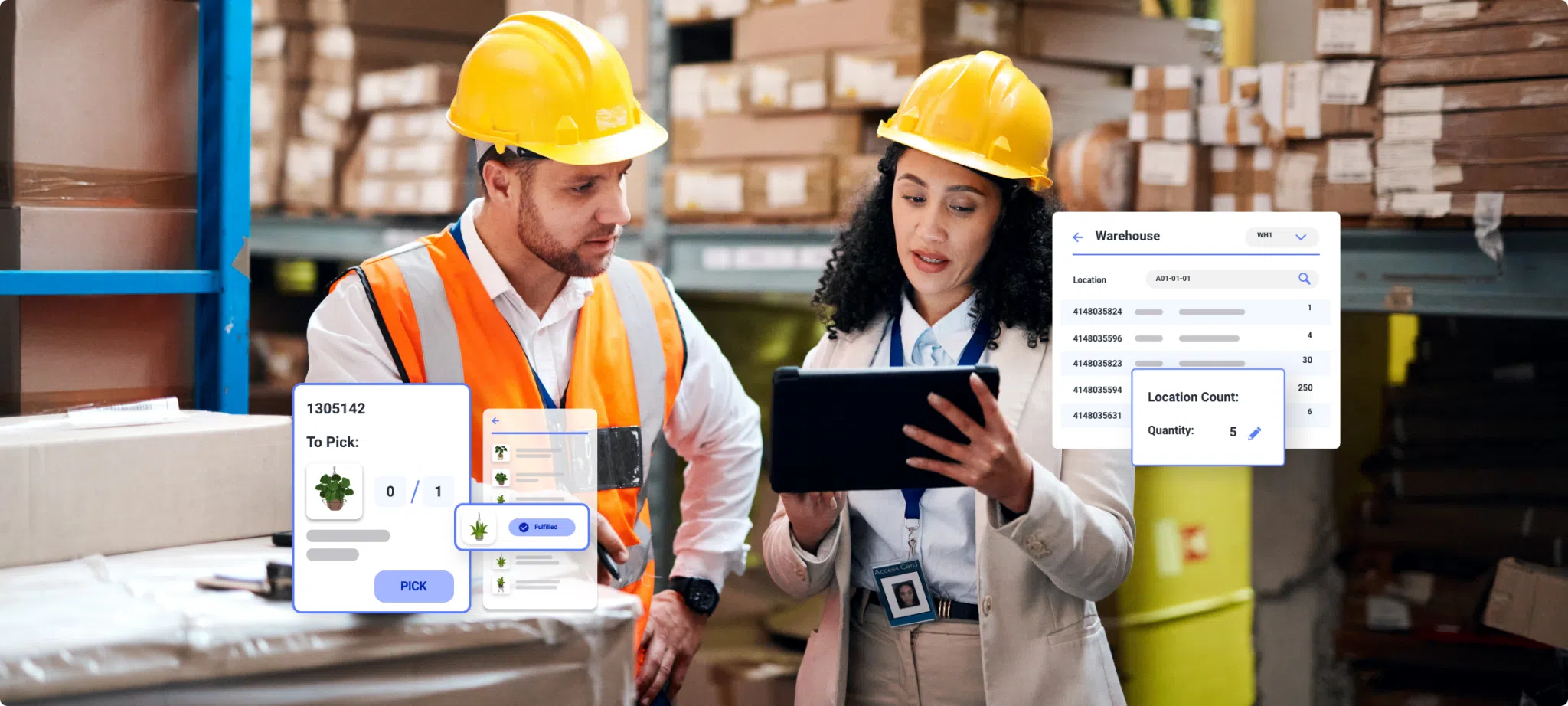
An inventory control system is the combination of technology (software and hardware) and processes used to supervise the inventory you physically possess. Its domain begins the moment stock is received at your facility and ends the moment it is shipped out. A control system tracks all warehouse-level activities, including:
- Receiving and putaway
- The inflow inventory during receiving
- All inventory movement within the facility
- The status of your complete physical inventory
- Storage and location tracking
- Movement between locations
- Picking, packing, and shipping
The primary goal of an inventory control system is to maintain perfect inventory accuracy and ensure the efficient, error-free handling of physical stock. This operational precision provides the reliable data that strategic inventory management depends on to function correctly.
Inventory control vs. inventory management: A key distinction
While the terms are often used interchangeably, they represent two different levels of managing your stock. Understanding the difference is key to building a comprehensive strategy.
- Inventory control refers to the operational, day-to-day processes and tools you use to manage the goods currently in your warehouse. It’s focused on the present and includes tasks like receiving, counting, and shipping stock. It is the “how.”
- Inventory management is the broader, strategic framework that encompasses forecasting, demand planning, and replenishment. It involves making decisions about what to buy, when to buy it, and how much to buy. It is the “what” and “why.”
If inventory management is the strategic blueprint for handling your products, inventory control is the set of tools and daily processes you use to execute that plan.
Linnworks demo: how to master inventory management
Master inventory management with Linnworks. Centralize stock and automate updates across all your sales channels effortlessly.

Why is inventory control crucial for your business?
Implementing a robust inventory control system moves your business from reactive problem-solving (e.g., searching for lost stock) to proactive strategy. The high-quality data from your system directly impacts your finances, operations, and customer satisfaction in several key ways:
- Prevents stockouts and protects sales. Accurate, real-time data from your control system is the only way to get a true picture of your available-to-sell stock. This prevents you from selling products you don’t have, eliminating canceled orders and protecting customer trust.
- Enables lower holding costs. To reduce overall inventory cost, management needs to optimize the inventory level of every item. Your control system provides the precise inventory data needed for this, helping to avoid capital drain from excess stock and high storage fees.
- Increases operational efficiency. Automating inventory tracking with tools like barcode scanners minimizes the human error, time, and labor associated with manual counts and spreadsheets. This makes your entire warehouse operation faster and more accurate.
- Empowers smarter cash flow management. A control system provides a clear, real-time view of your inventory’s value and movement. This empowers management to make smarter purchasing decisions, prevent wasteful spending on slow-moving items, and direct capital where it’s needed most.
- Provides the data for better forecasting. By understanding sales trends, management can better predict customer demand. Reliable inventory data from your control system is the foundation for this, and also allows management to track key metrics like inventory turnover.
Learn more: why inventory control is important for ecommerce businesses.
Types of inventory control systems
Inventory control systems are built around a core method of tracking stock. The two primary systems are Perpetual and Periodic. The right choice depends on your business model, sales volume, and need for real-time data.
Perpetual inventory system
A perpetual inventory system uses software to track stock movements in real-time. Every time an item is sold, received, or moved, the system automatically updates the inventory count, providing a constant, accurate view of stock levels through real-time inventory tracking.
- Pros: It offers high accuracy, provides real-time data for decision-making, and is essential for businesses with high sales volume or multiple sales channels.
- Cons: It requires a higher initial investment in software and hardware (like barcode scanners) and is dependent on technology to function correctly.
Periodic inventory system
A periodic inventory system relies on physical stock counts at specific, scheduled intervals (e.g., weekly, monthly, or quarterly). The inventory balance is only updated after a manual count is completed and reconciled.
- Pros: This method has a lower upfront cost and is simpler to implement for small businesses with a limited number of products.
- Cons: It lacks real-time visibility, which increases the risk of stockouts or overstocking. The manual counting process is also labor-intensive and prone to human error.
How systems support a Just-in-Time (JIT) strategy
Just-in-Time (JIT) is not a type of inventory control system itself, but rather a high-level management philosophy that is impossible to execute without a flawless control system. JIT strategy aims to hold minimal inventory by receiving goods only as they are needed.
- System Requirement: This philosophy demands a real-time, perpetual inventory control system. The system must provide instantaneous, 100% accurate data on stock levels to trigger precise purchase orders just in time for production or fulfillment. Any data lag or inaccuracy in the control system would cause the entire JIT strategy to fail.
How inventory control systems execute key techniques and strategies
Beyond the high-level system you choose, a modern control system is used to execute specific techniques. This level of stock control is a core pillar of a larger warehouse management strategy, enabling broader business goals.
Core warehouse control techniques
These are true operational methods that a control system enforces within the warehouse to manage the physical flow and valuation of goods.
- FIFO (First-In, First-Out): This method ensures that the first goods added to inventory are the first to be sold. A control system facilitates this by directing pickers to the oldest stock first, which is essential for preventing spoilage or obsolescence in industries like food, cosmetics, or electronics.
- LIFO (Last-In, First-Out): This method assumes the most recently acquired items are sold first. While primarily an accounting technique for valuation and tax purposes in certain regions, a control system can be configured to track inventory costs based on this principle.
Enabling management strategies with system data
The following are management models that are not part of inventory control, but are entirely dependent on the accurate, real-time data that a robust control system provides.
- ABC Analysis: This management strategy involves categorizing products (A-items are high-value, C-items are low-value) to prioritize attention. Your control system enables this by providing the two key data points needed for the analysis: sales velocity and unit cost. Once management creates the categories, the system can be configured to enforce different control rules (e.g., “Cycle count A-items weekly, but C-items quarterly”).
- Min-Max Replenishment: This is a replenishment model set by management. You determine the minimum stock level that triggers a reorder and a maximum level to prevent overstocking. The inventory control system automates this model by constantly monitoring stock levels in real-time. When the min threshold is reached, the system automatically triggers a reorder alert.
- Vendor-Managed Inventory (VMI): In this strategic supply chain partnership, a vendor takes responsibility for replenishing your stock. This is only possible if your inventory control system can provide the vendor with a secure, real-time data feed (often via an API) of your current on-hand inventory, which they use to schedule shipments.
Learn more: get a deeper understanding of inventory management techniques
Configuring automated replenishment
A primary feature that separates a basic inventory control system from a powerful one is its ability to automate replenishment. This feature, however, requires you to configure it with specific data points. These numbers are strategic values determined by inventory management, but your inventory control system is the tool that uses them to execute the plan.
When evaluating a system, look for the ability to set the following values for each product:
1. The reorder point (the “when”)
This is the setting in your software that defines the minimum stock level an item can reach before the system takes action.
- What it is: A specific number (e.g., “90 units”).
- Who provides it: This is a strategic figure provided by management. It is carefully calculated to prevent stockouts based on sales velocity and supplier lead times.
- The System’s Role: Your control system’s job is to constantly monitor the real-time stock level for an item. The moment the quantity on hand drops to the reorder point number you’ve entered, the system automatically triggers an alert or creates a draft purchase order. This feature eliminates the need for manual monitoring.
2. The reorder quantity (the “how much”)
This setting tells the system how much stock to order once the reorder point has been triggered.
- What it is: A specific number (e.g., “250 units”).
- Who provides it: This is another strategic figure from management, calculated to get the best price from suppliers and minimize holding costs.
- The System’s Role: When the system generates a purchase alert or order, it will use this quantity as the default amount. This ensures that ordering is not only timely but also cost-effective, according to the strategy set by management.
In summary: you don’t use an inventory control system to calculate these strategic numbers. You use it to execute the strategy flawlessly. The ability to easily input and automate actions based on a reorder point and quantity is a critical, time-saving feature to look for when choosing your inventory control solution.
Technology powering modern inventory control
Modern inventory control relies on a combination of hardware and software working together to automate processes and ensure data accuracy.
Barcode scanners
Barcode scanners are the most common tool for fast and accurate data capture. By scanning a product’s barcode upon receipt, movement, and sale, businesses can instantly update their inventory records, dramatically reducing manual data entry errors.
QR codes
Functioning like next-generation barcodes, QR (Quick Response) codes can store significantly more information. They are easily scanned by smartphones, making them a low-cost and accessible option for tracking inventory without specialized hardware.
Radio frequency identification (RFID)
RFID technology uses radio waves to automatically identify and track tags attached to objects. Unlike barcodes, RFID tags do not require a direct line of sight to be read, allowing businesses to scan entire pallets or rooms of inventory simultaneously. This makes it ideal for high-volume warehouses and securing high-value items.
Integrated inventory control software
This inventory software is the brain of the entire system. Good management software of this type acts as the central hub that connects your data-capture hardware (scanners), your sales channels (e.g., your ecommerce site), and other key business platforms like your order management system or accounting software. A powerful integrated software provides a single source of truth for all inventory data, enabling advanced reporting, automated alerts, and process automation.
Choosing the right system for your business
Selecting the right inventory control system requires a clear assessment of your operational needs, product types, and business goals. Here are the key factors to consider:
Assess your business size and sales volume
A small boutique with a handful of products and low sales volume may be able to function with a simpler periodic system. However, any business with significant sales volume, multiple sales channels (like a physical store and an ecommerce site), or plans for growth will need the real-time data and accuracy of a perpetual inventory system to prevent overselling and operational errors.
Consider the complexity of your inventory
The nature of your products will dictate the system features you need. Do you sell perishable goods that demand strict FIFO (First-In, First-Out) enforcement by your software? Are your products high-value items that would benefit from the enhanced tracking and security of RFID technology? Map your product needs to the features of the system.
Evaluate your strategic goals
Your company’s long-term strategy impacts your system choice. For example, if your management’s goal is to implement a Just-in-Time (JIT) strategy, the decision is made for you: you must invest in a highly reliable perpetual inventory system. A JIT strategy cannot function with the data lag and potential inaccuracies of a periodic system.
Determine your budget and technical resources
While periodic systems have a low upfront cost, the risk of error and high labor costs for manual counts can make them more expensive in the long run. Perpetual systems require a higher initial investment in software and hardware, but they provide a significant return on investment by reducing errors, saving labor, and preventing lost sales.
For businesses managing high-volume, multi-channel sales, a perpetual inventory system is essential. Solutions like Linnworks integrate these advanced techniques into a single platform, automating reordering and providing real-time visibility across your entire operation.
Frequently asked questions (FAQs)
The two primary inventory control systems are the Perpetual System, which tracks stock in real-time using software, and the Periodic System, which relies on manual physical counts at set intervals. Management philosophies like Just-in-Time (JIT) are not systems themselves but are strategies that rely on a highly accurate perpetual system.
Just-in-Time (JIT) is a management philosophy focused on minimizing inventory holding costs by receiving goods from suppliers only as they are needed for production or customer fulfillment. It is also known as a “lean” or “demand-pull” methodology and requires a flawless perpetual control system to succeed.
RFID systems use tags that transmit data via radio waves. In inventory control, this allows for the rapid, simultaneous scanning of multiple items without a direct line of sight (e.g., an entire pallet at once). This technology greatly improves the speed and accuracy of receiving and counting processes in a warehouse.