
A guide to inventory scanners for efficient inventory management
Manual inventory tracking, spreadsheets, pen-and-paper counts. They work fine at a small scale. As order volume grows, doing the repetitive work by hand leads to delayed shipments, canceled orders, and mismatched stock counts. Inventory scanners fix this by capturing every product movement the moment it happens.
An inventory scanner reads barcodes to instantly update your stock records, whether you’re receiving, packing, or shipping an item, so your inventory count stays accurate without manual data entry.
Inventory management savings calculator
What is the current cost of your mis-ships, out of stocks and lack of labor efficiency?
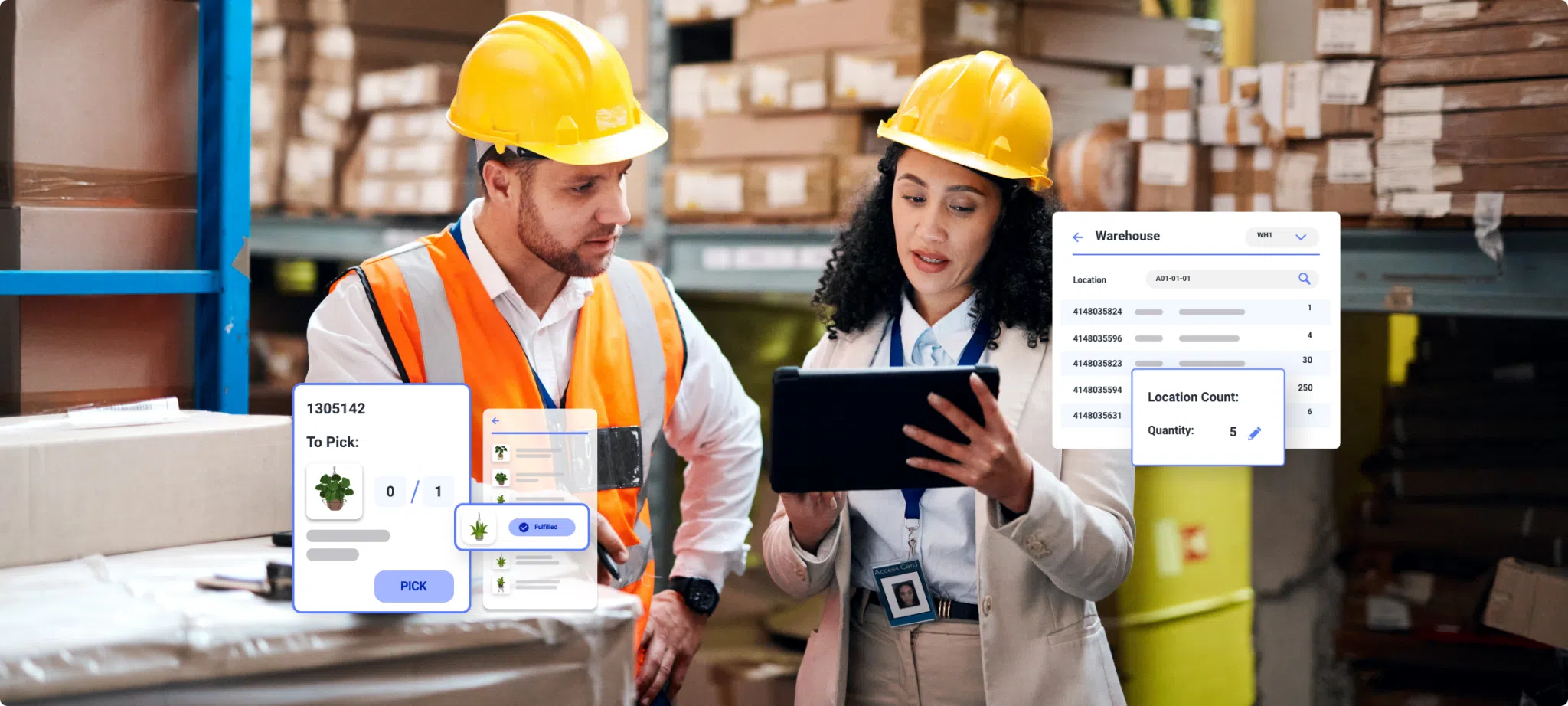
Why manual inventory tracking breaks down
Manual tracking breaks in three ways as a business scales:
- Human error. Miscounted items, misread SKUs, and mistyped data all create discrepancies that compound over time.
- Time cost. Every manual update — adding stock, recording a sale, running an audit — takes time that your team could spend on growth.
- Stale data. A count that doesn’t update the moment stock moves makes overselling and stockouts inevitable.
This shows up as delayed shipments while staff hunt for stock, canceled orders when an item marked “in stock” isn’t available, and customers who don’t come back after a bad experience.
Why automation and barcode scanning matter
Barcode scanning removes manual work. Every time you receive, move, or ship a product, scanning it updates your inventory system immediately, so your stock count reflects your current reality.
Retailers are already moving this way. In Linnworks’ 2026 State of Commerce Ops report, 64.8% (UK) and 60.0% (US) of mid-market retailers said they run majority- or highly-automated operations. And higher automation tracked closely with stronger growth.
Automation won’t remove every source of error (a damaged barcode or a mis-scan can still happen). But it sharply cuts the volume of manual data entry, which is where most inventory errors come from.
How inventory scanners work with your inventory system
A barcode scanner reads a product’s barcode (a pattern of lines or dots that encodes product data), decodes it, and sends that information to your inventory system instantly. This keeps a live, accurate link between the products on your shelf and the records in your software.
Types of barcode scanners
- Handheld scanners. Lightweight and portable, suited to quick, mobile scanning in a warehouse or storefront.
- Fixed scanners. Stationary units built for high-traffic spots like packing or shipping stations.
- Wearable scanners. Worn on a glove or wrist for hands-free scanning in high-volume environments.
- Mobile scanning apps. Turn a smartphone into a barcode scanner, a flexible, low-cost option for smaller businesses.
How to choose the right inventory scanner
A few factors decide which scanner fits your business:
- Cost. Weigh the upfront price against the scanner’s long-term value to your operations.
- Barcode type compatibility. Confirm the scanner reads the barcode types you use, 1D or 2D.
- Usage environment. A warehouse, storefront, and fulfillment center each favor different scanner types.
- Durability. Rugged environments need scanners built to survive drops and rough handling.
- Connectivity. Bluetooth, Wi-Fi, or a wired connection. Pick based on how your team works.
| Scanner Type | Best For | Pros | Cons |
| Handheld scanners | Flexibility and portability across environments | Easy to use, cost-effective | Requires manual handling |
| Fixed scanners | High-volume workflows in a fixed location | High efficiency, minimal handling | Limited mobility |
| Wearable scanners | Large warehouses with fast-moving inventory | Hands-free, boosts productivity | Higher cost |
| Mobile device scanning apps | Smaller businesses or temporary use | Affordable, flexible | Slower and less durable than dedicated hardware |
What to weigh before you buy an inventory scanner
Scanners are a real investment, not just in hardware but in setup and staff training time.
If you’re a smaller seller with low order volume, a mobile scanning app is often enough to start. It gets you the accuracy benefit of barcode scanning without the upfront cost of dedicated hardware.
Dedicated handheld, fixed, or wearable scanners tend to make more sense once order volume or SKU count reaches a point where manual handling itself becomes the bottleneck.
Making it work with Linnworks
Stale counts, mismatched stock across channels, staff hunting for missing inventory. It all comes from unconnected data.
An inventory scanner fixes the data-entry half of that. Linnworks fixes the rest. It brings barcode scanning into a single system alongside your sales channels and warehouses, so a scan updates stock everywhere, not just your central record.
Book a free demo to see how Linnworks can help you manage inventory with more accuracy and less manual work.
FAQ
Pair the scanner with your inventory management system. Every scan, at receiving, during storage, or at fulfillment, updates your stock records automatically, so you always have a current count without manual entry.
Not necessarily right away. A mobile scanning app can cover a small business’s needs at low cost. Dedicated scanning hardware tends to pay off once order volume or SKU count grows enough that manual handling becomes the actual bottleneck.
Cost varies by type: mobile scanning apps are the cheapest way to start, handheld and fixed scanners cost more but handle higher volume, and wearable scanners sit at the higher end for large, fast-moving warehouses. The right choice depends on your order volume and how the scanner will be used day to day.
Yes. When paired with an inventory management system like Linnworks, a barcode scan can update stock levels across connected platforms, including Shopify, so a sale or return on one channel is reflected everywhere else.