Top 10 Warehouse Optimization Software Tools for 2025
Table of Contents

New commerce connects
Find out how Linnworks can help grow your business.
For modern digital commerce businesses, warehouse efficiency is the name of the game.
With the rise of omnichannel fulfillment and customers expecting next-day delivery as standard, warehouse operations have shifted from backend support to front-line strategy.
Over the past few years leading into 2025, we’ve seen a major leap forward in operational efficiency, integration speed, and artificial intelligence (AI) functionality—factors that transform warehouse operations into strategic assets for any modern digital commerce business looking for a powerful WMS solution. We’re talking real, boots-on-the-ground upgrades: intuitive mobile tools for staff, smarter automation, and faster time-to-value for new system rollouts.
The biggest shift is that customer expectations are truly solidifying. Buyers want speed, accuracy, and flexibility across every channel, which puts added emphasis on effective inventory control, real-time inventory tracking, and seamless warehouse processes. Meanwhile, warehouse teams are contending with labor shortages, rising overheads, and mounting pressure to improve sustainability metrics.
With the right technology partner like SkuVault Core however, businesses can transform these challenges into competitive advantages.
Whether it’s reducing picking errors, avoiding costly oversells, or syncing stock in real time across Amazon, eBay, Shopify, and more, the tools you implement now will determine how efficiently you scale in the quarters ahead.
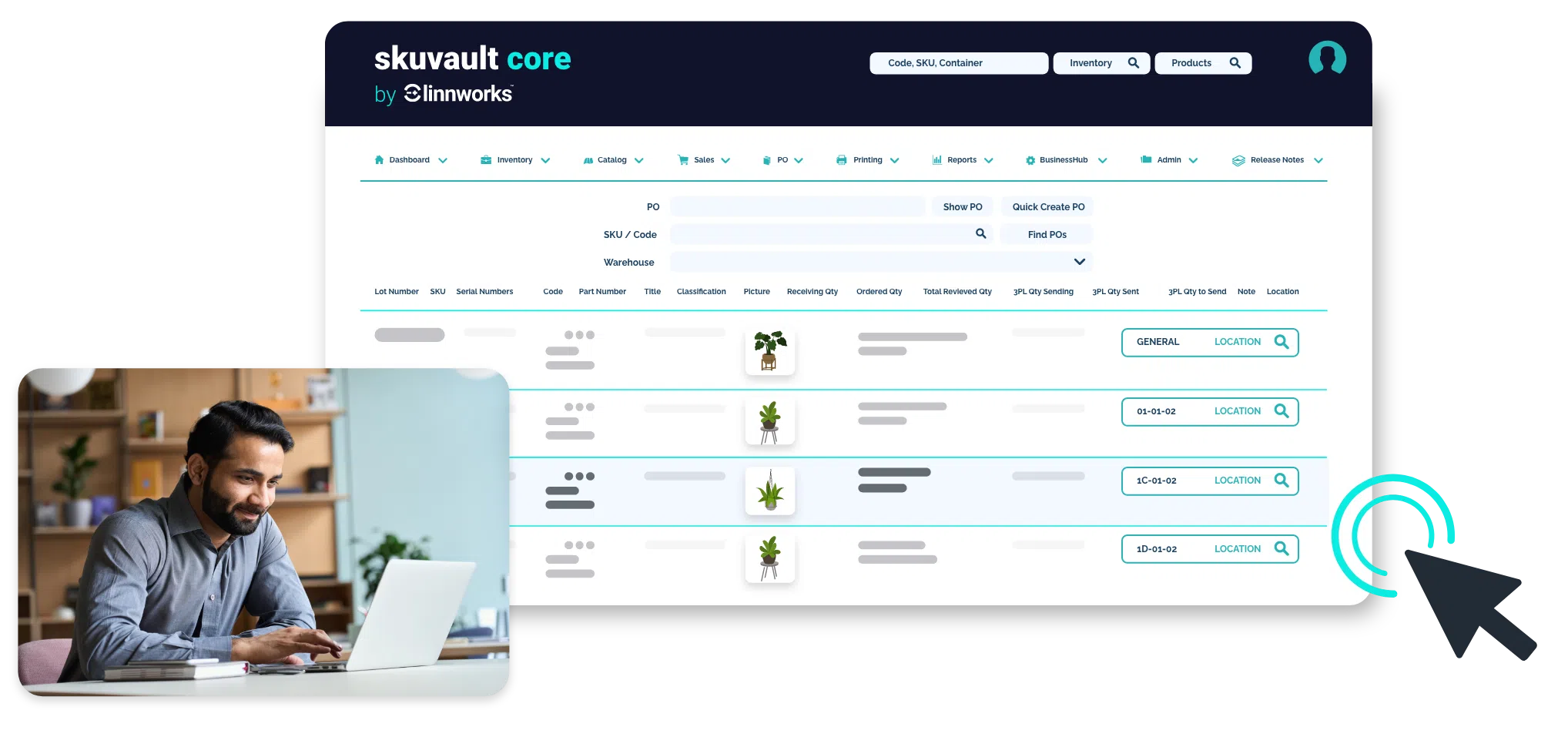
See SkuVault Core in action with this interactive tour
“The barcode scanning works phenomenally. That cuts down errors with sending stuff out, which leads to customer satisfaction, less returns and better stock control.”
Key Trends Driving Warehouse Optimization in 2025
AI & Machine Learning
Systems like Blue Yonder and Manhattan Associates WMS leverage advanced AI for demand forecasting and warehouse automation, moving beyond basic prediction to autonomous decision-making and continuous optimization.
Omnichannel & B2C Growth
Solutions such as Logiwa WMS and SkuVault Core cater to the fast-paced world of ecommerce platforms where inventory speed, real time inventory tracking, and accuracy across multiple channels are paramount for business success.
Cloud & SaaS Adoption
Platforms like Katana Cloud Inventory and NetSuite WMS offer the advantages of real-time access, seamless updates, and flexible pricing models—now with enhanced security and compliance features.
Cost Optimization
Tools such as Paccurate directly address the growing challenge of shipping costs, which continue to impact margins significantly in 2025. Intelligent cartonization and carrier selection have become essential capabilities.
Scalability & Workflow Precision
SAP EWM and Da Vinci Unified excel in high-volume, multi-channel operations requiring advanced configuration and seamless integration across complex business processes.
Sustainability
The newest generation of warehouse software includes carbon footprint tracking, packaging optimization, and waste reduction features to help businesses meet environmental goals and regulatory requirements.
Integration of IoT and Robotics
Leading platforms now offer native support for warehouse robotics, autonomous vehicles, and IoT sensors—creating truly connected warehouse environments where physical and digital systems work in harmony.
These trends are actively reshaping how today’s top warehouse optimization software solutions function and deliver value, driving supply chain optimization and more efficient warehouse management systems across the board. Let’s examine how the top 10 market tools and solutions are helping address these challenges.

The Top 10 Tools
If you’re comparing WMS solutions or looking to manage multiple warehouses efficiently, these leading WMS software options provide the advanced analytics and actionable insights required to stay ahead.
1. SkuVault Core
Key Strengths:
- Near real-time inventory synchronization across multiple sales channels
- Purpose-built specifically for modern ecommerce operations
- Detailed analytics and reporting for data-driven decisions
- Industry-leading multichannel inventory synchronization with 99.8% accuracy
- User-friendly quality control features with ‘safety net’ verification systems
- Seamless integration with 40+ sales channels
2025 Updates:
- Enhanced marketplace integrations
- Improved mobile functionality
- New predictive stocking features
Ideal Users: Retailers that need quick, accurate stock updates across multiple sales channels.
Pricing Consideration: Competitive pricing with tiered options based on business size.
2. Blue Yonder (formerly JDA Software)
Key Strengths:
- Industry-leading AI-powered demand forecasting and inventory optimization
- End-to-end supply chain visibility and management
- Advanced labor planning and optimization
- Autonomous workflow capabilities
2025 Updates:
- Enhanced machine learning algorithms that improve with each deployment
- Expanded IoT integration framework
- New sustainability dashboard for monitoring environmental impact
Ideal Users: Enterprise-level operations seeking predictive analytics and efficient cost management across complex supply chains.
Pricing Consideration: Premium pricing reflecting enterprise capabilities, with flexible modules available.
3. SAP Extended Warehouse Management (EWM)
Key Strengths:
- Purpose-built for complex, high-volume operations
- Deep integration with SAP ERP for cross-docking and robust data synchronization
- Comprehensive warehouse modeling capabilities
2025 Updates:
- Improved cloud deployment options
- Enhanced mobile interface
- AI-powered optimization suggestions
Ideal Users: Large enterprises needing top-tier scalability and advanced warehouse workflows, particularly those already in the SAP ecosystem.
Pricing Consideration: Significant investment with long-term ROI for complex operations seeking robust supply chain management features and deep ERP integration—especially if you’re also using platforms like Microsoft Dynamics.
4. Manhattan Associates WMS
Key Strengths:
- Leader in AI-driven warehouse automation and omnichannel fulfillment
- Advanced supply chain features built for complex, enterprise-grade environments
- Exceptional labor management capabilities
2025 Updates:
- Enhanced robotics integration platform
- Improved machine learning for slotting optimization
- New unified commerce dashboard
Ideal Users: Enterprises managing multiple distribution channels and requiring real-time decision-making.
Pricing Consideration: Enterprise pricing with modular options for growing businesses.
5. Oracle NetSuite WMS
Key Strengths:
- Real-time visibility of inbound/outbound logistics and advanced fulfillment
- Robust enterprise integrations and cross-region scalability
- Unified cloud platform with comprehensive business management
2025 Updates:
- Enhanced AI-driven insights
- Improved mobile experience
- Expanded marketplace integrations
Ideal Users: Mid-size to large businesses seeking a unified, cloud-based ecosystem across operations.
Pricing Consideration: Subscription-based with implementation costs dependent on complexity.
6. Logiwa WMS
Key Strengths:
- Built specifically for B2C/B2B fulfillment with flexible functionality for online sellers, distributors, and 3PLs
- Extensive ecommerce integrations to streamline supply chain processes
- Cloud-native architecture with rapid implementation, making it a standout warehouse management system for ecommerce-centric brands that prioritize flexible order management
2025 Updates:
- Enhanced automation capabilities
- New visual warehouse designer
- Expanded analytics dashboard
Ideal Users: ecommerce-driven organizations and 3PLs focused on quick setup and seamless order processing.
Pricing Consideration: Competitive mid-market pricing with usage-based options.
7. Fishbowl
Key Strengths:
- Top-selling WMS among SMBs, with multi-location tracking and QuickBooks integration
- Excellent manufacturing capabilities for smaller producers
- User-friendly interface requiring minimal training
2025 Updates:
- Improved cloud functionality
- Enhanced mobile application
- New ecommerce integrations
Ideal Users: Small to mid-sized businesses needing an affordable, user-friendly system with manufacturing capabilities.
Pricing Consideration: One of the most cost-effective solutions for growing businesses.
8. Katana Cloud Inventory
Key Strengths:
- Real-time insights into inventory and manufacturing operations
- Strong omnichannel sales support for ecommerce integration
- Intuitive user interface with minimal training requirements
2025 Updates:
- Advanced demand forecasting
- Expanded third-party integrations
- New sustainability tracking features
Ideal Users: SMBs and growing manufacturers seeking a cloud-based, moderately priced inventory tool with manufacturing capabilities.
Pricing Consideration: Subscription-based with tiered pricing that scales with business growth.
9. Paccurate
Key Strengths:
- API-first cartonization and cost-efficient packing that cuts shipping expenses
- Tailored specifically for ecommerce logistics workflows
- Industry-leading algorithms for package optimization
2025 Updates:
- Enhanced sustainability metrics
- New carrier-specific optimization features
- Improved integration capabilities
Ideal Users: Online sellers focusing on packaging optimization to reduce shipping costs and environmental impact.
Pricing Consideration: Usage-based pricing making it accessible for businesses of all sizes.
10. Da Vinci Unified
Key Strengths:
- Exceptional capabilities in labor management, dock scheduling, and ERP/EDI integration
- Workflow precision for high-volume warehouses
- Strong reporting and analytics capabilities
2025 Updates:
- New AI-powered workflow recommendations
- Enhanced mobile application
- Improved visual analytics dashboard
Ideal Users: Larger operations or 3PLs that require comprehensive labor and workflow tracking.
Pricing Consideration: Mid to high-range pricing reflecting enterprise capabilities.
Selecting the Right Tool for Your Warehouse Operation
While each warehouse management solution offers unique advantages, finding the perfect fit for your business requires careful consideration of factors like scalability, integration, and the needs of your warehouse managers.

Assessing Business Size & Complexity
SkuVault Core stands out as the ideal solution for growing ecommerce businesses and mid-sized operations that need multichannel inventory synchronization without enterprise-level complexity. Its scalable architecture grows seamlessly with your business, making it perfect for companies experiencing rapid expansion.
Smaller operations with simpler needs may consider solutions like Fishbowl or Katana for their affordability, straightforward implementation, and focus on core inventory management software that keeps inventory levels accurate without overcomplicating workflows. Meanwhile, enterprise-scale businesses with complex global supply chains typically require the comprehensive capabilities of platforms like SAP EWM or Blue Yonder.
Integration Requirements
Your existing technology ecosystem significantly impacts selection. SkuVault Core offers seamless native integration with QuickBooks, making it the perfect choice for the many ecommerce businesses using this popular accounting platform. With over 40+ pre-built connectors for sales channels and marketplace platforms, SkuVault Core can connect your entire business ecosystem in minutes rather than weeks.
For businesses using other financial systems, it’s worth noting that QuickBooks users naturally align with Fishbowl as well, while SAP ERP users would benefit from EWM’s native integration. Always evaluate each solution’s API capabilities and integration options for your mission-critical systems before making a final decision.
Budget & ROI Considerations
Look beyond initial subscription costs to implementation fees, training expenses, and anticipated return on investment. The most cost-effective solution isn’t always the cheapest—consider the value of improved efficiency, reduced errors, and enhanced customer satisfaction when calculating ROI.
Feature Prioritization
Identify your must-have features versus nice-to-have capabilities. Is AI-driven demand forecasting essential for your business, or would you benefit more from advanced labor management or cartonization? Understanding your priorities will help you select a solution that addresses your most critical challenges.
Free Trial and Demo Strategies
Most providers, including SkuVault Core, offer personalized demos that allow you to see how the platform would work with your specific business model. Create a structured evaluation process with specific scenarios to test during these demonstrations. Involve key stakeholders from different departments to ensure the solution meets cross-functional needs.
Once you’ve selected and implemented your warehouse optimization solution, it’s important to look ahead to ensure long-term success.
Future-Proofing Your Warehouse Operations
With today’s tools in place, it’s also critical to stay prepared for tomorrow’s innovations.

Emerging Technologies to Watch
Keep an eye on advancements in autonomous robotics, voice-controlled systems, augmented reality picking, and route planning enhancements—all designed to elevate warehousing and supply chain operations to the next level. These technologies are increasingly being integrated with warehouse management systems to create highly efficient operations.
Preparing for Further Automation
Warehouse automation continues to accelerate. Even if full automation isn’t in your immediate plans, choose software that supports gradual automation implementation, from basic conveyor systems to advanced robotics.
Developing a Technology Roadmap
Create a 3-5 year technology vision for your warehouse operations. This should align with your business growth projections and include planned software upgrades, hardware investments, and process improvements.
As you consider your options, here are answers to some common questions that arise during the warehouse software selection process.
Frequently Asked Questions
Inventory management software focuses on tracking goods throughout the supply chain, monitoring stock levels, and managing reordering. Warehouse management software encompasses these functions while adding deeper operational capabilities like picking, packing, shipping, and labor management. Most comprehensive warehouse systems include inventory management as a core component.
Effective distribution centers now employ a combination of efficient processes, advanced technology, and skilled personnel. Best practices include regular optimization of warehouse layout based on AI recommendations, implementation of appropriate automation technologies, ongoing staff training, and data-driven decision-making using advanced analytics.
Absolutely. Many modern solutions are designed with scalability in mind, offering entry-level tiers for smaller operations. Cloud-based platforms like Fishbowl and Katana provide sophisticated capabilities without the significant upfront investment previously required. For smaller businesses, these systems can dramatically improve accuracy, efficiency, and customer satisfaction.
Calculate ROI by comparing the total cost of implementation (software, hardware, training, and maintenance) against anticipated benefits. These typically include labor savings from increased productivity, inventory reduction from better forecasting, error reduction, improved customer satisfaction, and freed warehouse space from optimized storage. Most businesses see ROI within 12-18 months, with ongoing benefits increasing over time.
Modern warehouse systems offer multiple integration methods, including pre-built connectors for popular platforms, RESTful APIs for custom integration, EDI capabilities for trading partners, and middleware solutions for complex enterprise environments. Leading vendors now provide integration marketplaces where you can browse and activate connections to hundreds of business applications.
Today’s warehouse solutions contribute to sustainability through optimized picking routes (reducing energy use), cartonization (minimizing packaging waste), improved inventory forecasting (reducing obsolescence), paperless operations, and more efficient transportation planning. Many now include specific sustainability dashboards that track environmental impact metrics and suggest improvements.
Take Your Warehouse Operations to the Next Level with SkuVault Core
In today’s competitive ecommerce landscape, having the right warehouse optimization solution is about efficiency while also creating exceptional customer experiences that drive growth. SkuVault Core delivers the perfect combination of accuracy, scalability, and ease of use that growing online retailers need.
With features like real-time inventory synchronization across 40+ sales channels, built-in quality control systems that reduce picking errors by up to 83%, and implementation that takes weeks instead of months, SkuVault Core helps you transform your warehouse operations without disrupting your business.
Our customers consistently report:
- 87% faster order fulfillment
- 90% fewer out-of-stock incidents
- 83% reduction in picking errors
Don’t just take our word for it–see how businesses like Trim Healthy Mama achieved 99.98% inventory accuracy with SkuVault Core, or how other retailers have cut shipping costs while improving customer satisfaction.
Ready to optimize your warehouse operations? Book a personalized demo today and discover how SkuVault Core can help you streamline your operations, reduce costs, and grow your business.