
Inventory Management Software
Grow orders. Without overselling.
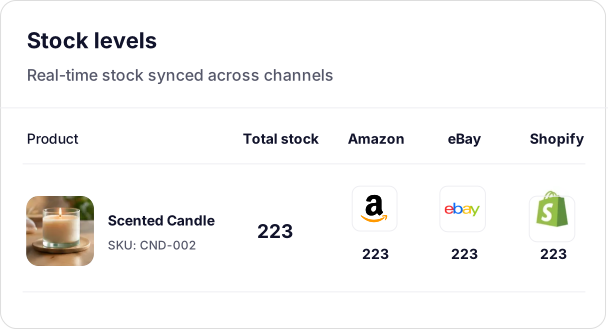
Oversells, phantom stock, and manual reconciliation are symptoms of an inventory system that can’t keep up. Linnworks updates stock across every channel the moment an order lands, so the same unit is never sold twice.
Trusted by 4,000+ retailers





Inventory that keeps up with every sale.
Our data shows that a single Amazon stockout costs an average of $18,000 in lost revenue. A seven-day stockout can drop organic search ranking by 30–50%. And that’s just one channel.
Oversells
Overselling products hurts your customer experience, refund rate, and platform integrity. Linnworks deducts stock everywhere the moment an order lands, so you don’t oversell.
Stock sync
Relying on daily batch syncs means trading on yesterday’s stock count. Linnworks updates your inventory count continuously, so every channel reflects what’s actually available.
Replenishment
Tracking reorder points across hundreds of SKUs manually isn’t scalable. Linnworks surfaces sales velocity and flags what to reorder so stock arrives before the shelf empties.
How Linnworks inventory management works.
Here’s what happens from the moment stock enters your catalog to the moment it needs reordering.
01
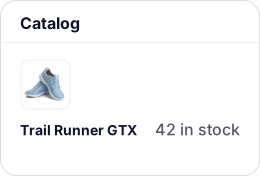
Your catalog is the source of truth
One central record holds every product. Every channel listing pulls its stock level from that record.
02
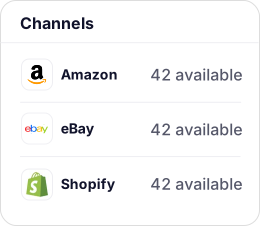
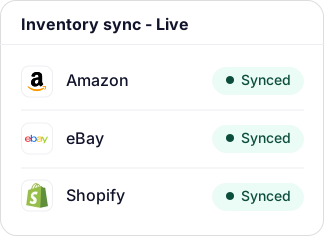
Stock syncs in under 10 minutes
When an order lands on any channel, Linnworks reduces availability everywhere before the next sale can be placed.
03
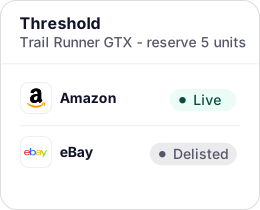
Automations prevent overselling
Reserve stock per channel and pull listings automatically when stock is low to protect listing and account health.
04
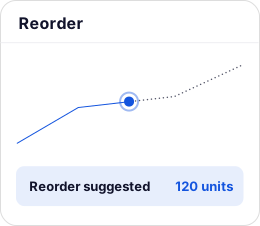
Velocity data drives replenishment
Sales velocity and suggested reorder quantities surface before the shelf empties, so buying is proactive.
What’s included in Linnworks inventory management.
Fast inventory sync
Stock deducts across every channel when an order lands. Per-channel buffers, listing suppression, and composite SKU support keep oversells near zero.
Inventory automation
Velocity tracking and reorder prompts surface replenishment before the shelf empties, with purchase orders created in a few clicks.
Multi-location & 3PL inventory
Multichannel inventory management across owned warehouses, 3PLs, and dropship suppliers, updated automatically as stock moves between locations.
The channels that matter. All in sync.
Adding a new channel is a configuration exercise, not an all-hands project. Inventory rules, pricing logic, and fulfillment routing carry over automatically.

What accurate inventory does for your growth.


“With Linnworks, we’re able to have 100% data visibility and transparency, so we can identify where the inefficiencies are and drive the cost out of the system.”

Read the case study

“We achieved our multimillion-dollar revenue target in the first year. We simply couldn’t have achieved this with our old system.”
Read the case study
“Linnworks gave us what the individual channels could not — a genuine single source of truth for inventory and orders across the whole operation.”
Read the case study
Inventory management FAQs.
Get answers to our most asked questions about multichannel inventory management and forecasting.
Linnworks maintains a single central inventory record and pushes updates to every connected channel simultaneously. The moment a sale lands on any channel, Linnworks reduces the available quantity and syncs every connected channel before the next sale can be placed. Three further mechanisms bring oversells as close to zero as possible: per-channel stock buffers reserve inventory; automatic listing suppression takes a listing offline at your defined threshold; and visual low-stock alerts flag approaching stockouts. Linnworks data shows that a single Amazon stockout costs an average of $18,000 in lost revenue, and a seven-day stockout can drop organic search ranking by 30–50%.
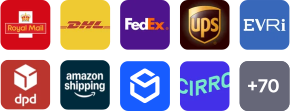
Linnworks connects natively to 100+ sales channels, 70+ shipping carriers, plus 3PLs, ERPs, and analytics tools. That includes Amazon, eBay, Shopify, Walmart, TikTok Shop, Temu, Argos, B&Q, OnBuy, WooCommerce, and Magento. Through our partnerships with Mirakl and other apps, access extends to 300+ marketplaces worldwide. Adding a channel is typically free and takes minutes; pricing is based on order volume, not channel count, so expansion doesn’t create a cost surprise.
Yes. Linnworks provides a unified inventory view across owned warehouses, third-party logistics, and dropship suppliers from a single dashboard. Inter-warehouse transfers are tracked at every stage. 3PLs and shipping services connect via FTP, CSV, or API, including ShipBob, CIRRO Fulfillment, and ShipStation. Blended fulfillment (splitting one order across your warehouse, a 3PL, and a dropship vendor) is handled natively through the Rules Engine. Inventory updates across all channels as stock moves between locations.
Linnworks is built for multichannel retailers processing 1,000+ orders per month across three or more sales channels. The typical customer is outgrowing spreadsheets, a legacy system, or a single-channel setup, and needs to handle inventory complexity, order automation, and fulfillment at scale without proportional headcount growth. Customers processing $1M–$500M+ in annual GMV use the platform, which scales with order volume.
Inventory management software tracks what stock you have, where it is, and keeps those numbers accurate across every channel. Order management software handles what happens after a sale: routing, fulfillment, shipping, and tracking. The two are tightly dependent: accurate inventory makes routing possible, and order management keeps inventory accurate as stock moves. Linnworks handles both in one platform, which is why customers describe it as the operational backbone of their business.