
What is pick, pack, and ship in ecommerce fulfillment?
Table of Contents

New commerce connects
Find out how Linnworks can help grow your business.

Pick, pack, and ship is the part of order fulfillment that takes place in the warehouse. A picker pulls each item off the warehouse shelves, a packer checks it and boxes it, and the parcel leaves with a shipping label and a tracking number. The right picking method depends on how many orders you ship and how many SKUs you carry.
For multichannel sellers, the first chance for a mistake comes before anyone picks anything.
Inventory management savings calculator
Uncover the cost of your mis-ships, out of stocks and lack of labor efficiency with our inventory management savings calculator.
One order queue for every channel
The first mistakes slip in when someone has to copy orders from each sales channel by hand. Then someone has to check stock against every channel before the warehouse can start. Every manual action is a chance to copy the wrong variant or assign a unit you’ve already sold on another channel, and a pick list is only as accurate as the order data behind it.
Connecting your sales channels to one order management system takes the copying out, because every order lands in the same queue and every sale draws down the same stock figure.
At Turtle Wax, the brand’s core ERP couldn’t handle the flow of direct-to-consumer orders, so the team connected Linnworks to its 3PL (third-party logistics) partner and its couriers. “This has resulted in 98% of our orders passing from site to warehouse picker in less than 15 mins,” says Jon Fawcett, ecommerce manager for EMEA.
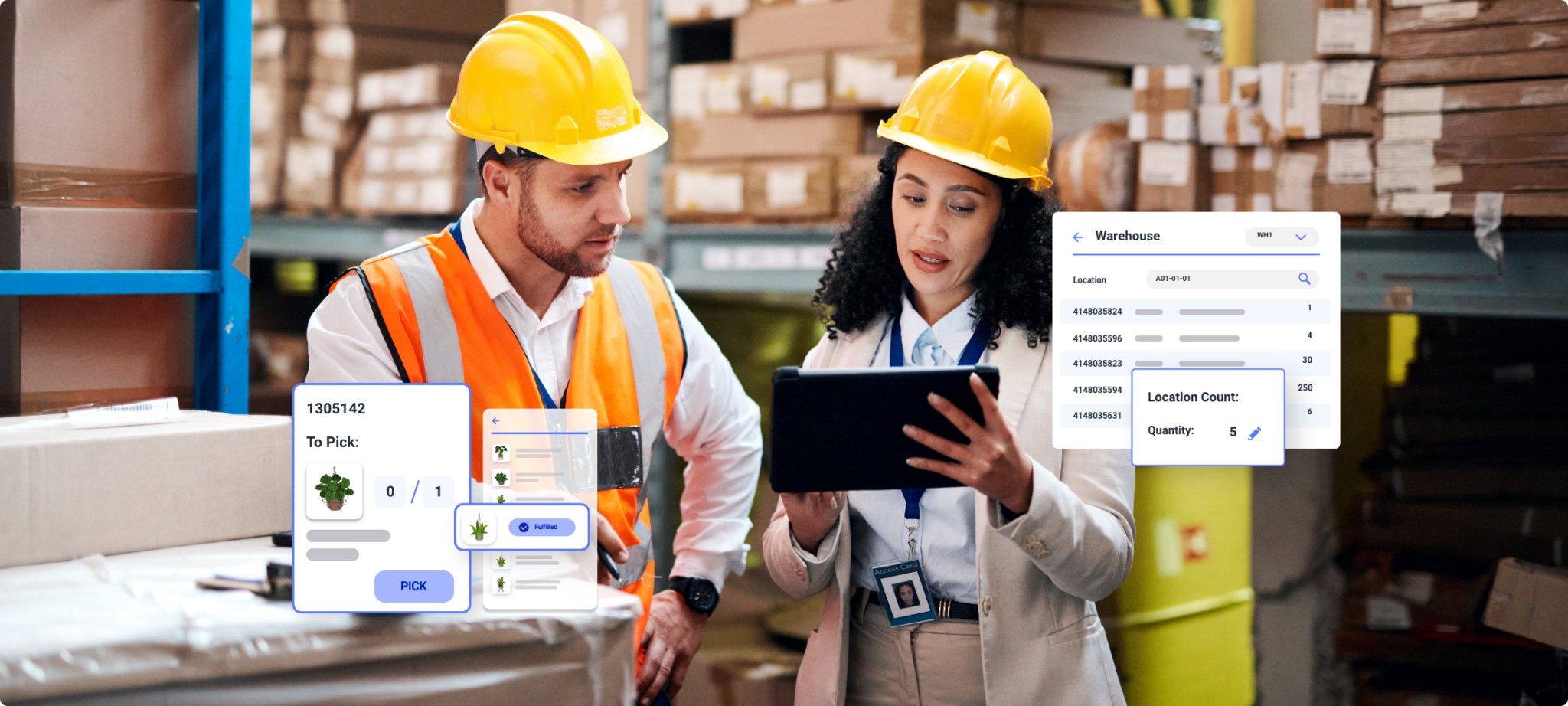
In Linnworks, every new order from a connected channel lands in the Open Orders screen. You can save views there with their own filters and sorting, such as one for orders ready to process and another for orders waiting on stock, so the warehouse works from a list of orders it can ship.
If you ship from more than one location, including a 3PL or Amazon FBA, you can set rules that route each order by destination or product type.
Mastering 3PL: the ultimate guide to third-party logistics
Explore the benefits of third-party logistics and learn how it can enhance your ecommerce operations effectively.

Picking
A pick list tells the picker which items to collect for each order and where each one is stored, usually as a bin location (the exact shelf or bin where a SKU is kept). The picker walks the aisles, takes each item off the shelf, and brings everything to the packing station.
Plenty of warehouses still pick from paper lists. In Modern Materials Handling’s 2025 Warehouse/DC Operations Survey of 101 warehouse and logistics professionals, about 40% said they use some paper-based picking, down from 44% the year before.
Printed pick lists hold up for a small catalog and a light order day. But a printed list goes stale as soon as a new order lands, and the office can’t see which picks are done until the picker comes back. Linnworks’ digital pick lists run on a phone or tablet, and you can assign each list to a picker and follow it live.
Traditional pick lists also have pickers complete each order in turn. Every order picked on its own sends someone back down aisles they walked for the last one. A pickwave is a set of orders picked together in one trip. Pickwaves batch orders by SKU location, so different orders that require items from the same aisle get one stop instead of several. The list sorts into an efficient walking route by bin location.
You can require a scan of the item barcode and the bin location before a pick registers, so a picker who grabs the wrong size or color finds out before leaving the shelf. If a barcode is damaged or missing, a manual override lets the pick go through and records it in an audit trail.
When a pick list or pickwave is done, you can print packing slips (the printed list of what’s in each parcel) and shipping labels for everything in one batch.
Packing
At the packing station, the packer checks the picked items against the order, chooses a box or mailer that fits, adds protective fill if anything could shift in transit, includes a packing slip, then seals the parcel, ready for its shipping label.
The packing station is the last chance to catch a mis-pick (the wrong item, size, or quantity) before it costs you return postage and a refund. With pack verification in Linnworks, the packer scans each item against the order, and the order can’t move forward until the box contents match.
On a pickwave, pickers can scan a labeled tote (a reusable crate that holds the items for one order) before filling it, so the packing station knows what’s in each tote before anyone opens it.
Shipping
Shipping means choosing a carrier and service for each parcel, printing the label, and handing the parcel over at collection or drop-off. The service sets the price and delivery speed, so most sellers choose it based on the parcel’s weight, size, and destination.
In Linnworks, you can process orders one at a time at the packing station or in bulk. Processing locks the order, so check the shipping service and package weight before you process. If something does go wrong after that, you can reprint the label or invoice, raise an RMA (return merchandise authorization), issue a refund, or create a resend order (a new order that ships the items again).
Linnworks rules can assign the carrier and service for each order by weight or destination, across more than 70 carrier and aggregator integrations. When price is the deciding factor, live quotes across carriers show the cheapest workable service.
Once the label prints, the tracking number goes back to the channel the order came from, and the customer gets a tracking notification without anyone on your team copying it over. Customer service has the number on hand when someone asks where their order is.
Which picking method fits your warehouse?
Single-order picking is still the most common. In the same Modern Materials Handling survey, 65% of respondents named it as an order-filling method, and 48% named batch picking, up from 44% the year before. The right method changes as you grow: single-order picking suits a low daily order count, batching pays off as volume climbs, and zones make sense once the catalog is too big for one picker to cover.
The four common picking methods differ in how orders get grouped before anyone walks the aisles:
- Piece picking (also called discrete or single-order picking): One picker collects every item for one order before starting the next. Nothing needs sorting at packing, so it suits lower order volumes, but travel time grows with every order you add.
- Batch picking: Several orders get picked in a single trip, then sorted into individual orders at packing. It suits higher order volumes, where cutting trips saves the most time, though the sorting step is one more place for a mix-up to happen.
- Zone picking: The warehouse is split into areas, and each picker pulls only the items stored in theirs. It suits large catalogs, though orders that span zones need a consolidation point before packing.
- Wave picking: Orders are released in scheduled groups, timed to your shipping schedule, and picked in batches or by zone. It fits high-volume warehouses with set carrier collection times, and someone has to plan each release around them.
Before your next peak
Pull last quarter’s returns and tag each fulfillment error by where it happened: at the shelf, at the packing bench, or between systems before the order reached the warehouse. Shelf errors point to scanning at pick, bench errors to pack verification, and copying errors to the order queue. Fix the biggest group first, then book a demo and see how you could run a day of orders from picking to tracking number.
Not ready for a demo? The Inside Peak report benchmarks when sellers prepare for peak, based on 207 million orders from Linnworks sellers in 2025. It includes a self-assessment to check your own readiness.
The peak survival guide
14 proven strategies from top ecommerce agencies
Ecommerce pick and pack FAQs
Is pick and pack the same as order fulfillment?
No. The order fulfillment process also covers receiving and storing inventory before an order comes in, and handling returns after it ships. Pick and pack is the warehouse work in between, where customer orders become sealed, labeled parcels.
What are pick and pack fulfillment services?
Pick and pack fulfillment services are 3PLs that store inventory for ecommerce brands and pick, pack, and ship their orders. Outsourced fulfillment makes sense when order volume outgrows your space or your team, or when you want stock closer to customers in another region. You give up direct control over the pack itself, including custom packaging and inserts, and you pay a fee on every order.
How much do pick and pack services cost?
It depends on how the provider bills. Providers typically charge either a flat fee per order or a base fee per order plus a charge for each additional item, and 57% bill packaging separately. In The Fulfillment Advisor’s 2026 survey of 500 warehouses in the US and Canada, picking and packing a one-item direct-to-consumer order averaged $3.21, plus $0.48 for each additional item. A one-item B2B order averaged $4.86. For the rest of a 3PL’s fees, see how much a 3PL costs.
What’s the difference between a warehouse management system and an order management system?
A warehouse management system (WMS) runs the building, and an order management system runs the channels. The WMS tracks bin locations and pick routes and confirms each pick and pack with a scan. The order management system pulls in orders from every marketplace and store and keeps inventory levels in sync across them. Some platforms, like Linnworks, handle warehouse, order, and inventory management in one system, so there’s no integration between them to maintain.
How should you set up a warehouse layout for faster picking?
Start with how fast each SKU sells. Put the fastest movers on the most reachable warehouse shelves nearest the packing stations, and keep look-alike variants (sizes or colors of the same product) in separate locations so pickers are less likely to grab the wrong one. Recheck the layout before peak, since seasonal products change which SKUs move fastest.
Can you combine picking methods?
Yes. In zone-batch picking, each picker collects a batch of orders but only from their own zone. Piece picking can also run alongside waves, for urgent single orders that can’t wait for the next release.
How does packaging affect shipping cost?
An oversized box can raise it. UPS, for example, bills on dimensional weight (length times width times height, divided by a figure from its rate guide) when a package is large relative to its weight, so empty space in the box costs money. Custom packaging is part of the customer experience, and it adds material cost and pack time to each order.
How do returns fit into pick, pack, and ship?
Returns run the process in reverse, and handling them is called reverse logistics. Each item comes back, gets inspected, and is either restocked or written off. A restocked item needs a known bin location and an inventory update on every channel. Until both happen, it sits in a returns pile while your listings undercount it.
How does pick and pack work for kits and bundles?
Pickers pull the individual components of a bundle. A kit (several SKUs sold together under one listing) should show on the pick list as its components, each with a bin location. Inventory should deduct from each component when the kit sells, so the kit’s available quantity drops to zero once any component runs out.