

Ecommerce operations in 2026: Why growth alone isn’t enough
Table of Contents

New commerce connects
Find out how Linnworks can help grow your business.
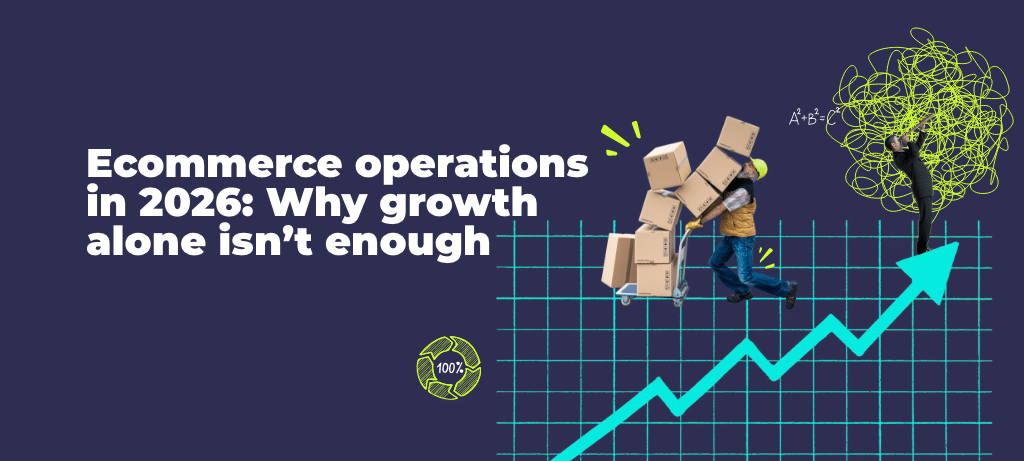
Ecommerce is growing fast.
Retailers are expanding across marketplaces, launching new storefronts, and reaching customers across more channels than ever before. But while growth is accelerating, many businesses are discovering that scaling ecommerce operations is far more difficult than generating demand.
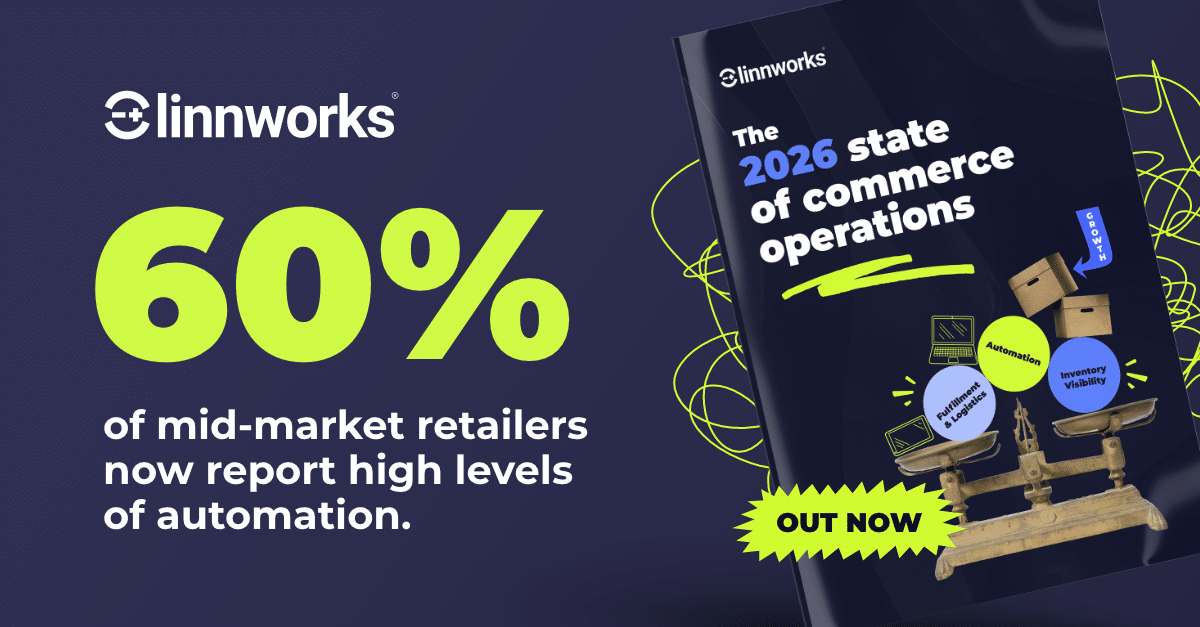
According to the latest State of Commerce Operations report from Linnworks, 89% of retailers report year-over-year growth. However, far fewer businesses say they are able to scale their operations efficiently.
State of Commerce Ops Report
Insights from 200+ retailers on automation, inventory visibility, marketplace strategy and global growth.
This highlights a critical reality in modern ecommerce:
Growth is common. Scalable ecommerce operations are not.
The growing complexity of ecommerce operations
Modern ecommerce operations are significantly more complex than they were even five years ago.
Today’s retailers manage:
- Multiple online marketplaces
- Direct-to-consumer webstores
- Social commerce channels
- International shipping partners
- Distributed warehouses and fulfillment locations
Each additional channel increases operational complexity.
Without the right technology and processes in place, scaling across these channels can lead to fragmented systems, manual workflows, and inventory management challenges.
This is why commerce automation and multichannel inventory management have become essential capabilities for ecommerce businesses that want to grow sustainably.
Multichannel ecommerce creates new operational challenges
Selling on multiple platforms unlocks new revenue opportunities — but it also introduces operational friction.
Retailers must now coordinate:
- Inventory across multiple marketplaces
- Orders coming from different sales channels
- Fulfillment across warehouses and shipping carriers
- Customer expectations for fast and accurate delivery
Without centralized systems for multichannel ecommerce management, operational issues quickly emerge.
Common problems include:
- Overselling inventory
- Delayed order processing
- Inaccurate stock levels
- Increased fulfillment costs
As ecommerce expands, these issues become harder to control.
This is why the most successful retailers are investing heavily in commerce automation and operational orchestration.
Why multichannel inventory management is critical for scaling ecommerce
One of the most important capabilities in modern ecommerce operations is inventory visibility.
To scale effectively, retailers must be able to see and manage inventory across all sales channels and fulfillment locations in real time.
However, the research reveals a significant gap.
65% of retailers report not having excellent inventory visibility across their ecommerce operations.
This lack of visibility creates serious operational risks:
- Products being oversold
- Stock sitting unused in the wrong warehouse
- Fulfillment delays that impact customer satisfaction
- Lost revenue opportunities
Effective multichannel inventory management solves these issues by synchronizing inventory data across platforms and enabling better operational decisions.
Retailers that achieve full inventory visibility gain a major competitive advantage.
The role of automation in ecommerce scalability
Manual processes are one of the biggest barriers to scalable ecommerce operations.
Many retailers still rely on manual tasks to manage:
- Inventory updates
- Order routing
- Channel reconciliation
- Fulfillment coordination
As order volumes grow, these workflows quickly become unsustainable.
This is where commerce automation plays a crucial role.
Automation allows ecommerce businesses to:
- Synchronize inventory across sales channels automatically
- Route orders to the optimal warehouse
- Manage fulfillment workflows efficiently
- Reduce operational errors caused by manual processes
By automating routine tasks, retailers can handle larger order volumes without increasing operational complexity.
How leading retailers are building scalable ecommerce operations
The State of Commerce Operations report shows that high-performing ecommerce businesses approach operations differently.
Rather than adding more manual processes or disconnected tools, they focus on building integrated and automated operational ecosystems.
Common strategies include:
- Implementing centralized ecommerce operations platforms
- Automating multichannel inventory management
- Using AI-driven forecasting and demand planning
- Diversifying logistics and shipping networks
These approaches allow retailers to maintain operational control as their businesses expand.
Instead of growth creating chaos, their operations scale smoothly.
The key question for ecommerce leaders
As ecommerce competition intensifies, operational efficiency is becoming one of the biggest differentiators between successful retailers and struggling ones.
This leads to an important question:
Is your ecommerce business built to grow — or built to scale?
Retailers that invest in automation, inventory visibility, and integrated systems are far better positioned to handle the increasing complexity of modern ecommerce.
Those that rely on manual workflows and disconnected systems may find growth becoming harder to manage.
State of Commerce Ops Report
Insights from 200+ retailers on automation, inventory visibility, marketplace strategy and global growth.
The latest State of Commerce Operations report from Linnworks explores the trends shaping ecommerce operations today and provides insights into how leading retailers are scaling successfully.
Inside the report, you’ll learn:
- The biggest operational challenges facing ecommerce businesses
- Why multichannel ecommerce is increasing operational complexity
- How automation is transforming ecommerce operations
- Strategies for building scalable multichannel inventory management
Download the full report to explore the findings and discover how to build ecommerce operations that scale.