What is a multichannel order management system (and do you need one)?
Table of Contents

Top 50 marketplaces to watch

It starts with a familiar sense of pride. You launched on Shopify, then expanded to Amazon and eBay. Sales are climbing, and your order volume is growing across every channel.
But behind the scenes, your operations are a frantic juggling act powered by a complex web of spreadsheets. You handle inventory management on one sheet after a sale, only to find another team member sold the same last item on a different marketplace moments before.
This is the breaking point for many growing ecommerce brands. What once worked for a handful of orders a day quickly descends into total chaos.
And the consequences are costly and damaging:
- Manual routing on every order: With orders arriving from every channel, someone has to decide where each one goes and how it ships, hundreds of times a day. That repetitive, manual decision-making slows fulfillment and invites errors that reach customers.
- Inaccurate inventory tracking: Not knowing what you have or where it is means missed sales opportunities and bloated carrying costs.
- Shipping delays: Manual order processing, label printing, and tracking updates are slow and prone to human error, resulting in late deliveries.
- Poor customer experiences: When orders are wrong, late, or unexpectedly canceled, customer trust evaporates, leading to bad reviews and lost repeat business.
- Overselling: When stock isn’t reconciled across channels, out-of-stock items keep selling, leading to canceled orders, angry customers, and potential penalties from marketplaces like Amazon.
These operational blunders are your biggest barriers to growth. To scale effectively across multiple channels, you need to move beyond manual processes.
A multichannel order management system (OMS) is how successful retailers manage this complexity and build a foundation for sustainable success.
Linnworks demo: fully integrated fulfillment solutions
Streamline operations, enhance accuracy, and automate processes for better efficiency.

What is a multichannel order management system?
A multichannel order management system is a centralized software platform that unifies order processing, inventory management, and customer information from your multiple channels.
Whether you sell on an online store like Shopify, on marketplaces like Amazon and eBay, or even in a physical store, an OMS brings every transaction into a single, cohesive dashboard.
Think of it as the central nervous system for your post-purchase operations. From the moment a customer clicks “buy” to the second the package arrives at their door, the OMS coordinates every step.
It creates a single source of truth, ensuring that your inventory levels, order status, and customer information are consistent and accurate across different channels, all the time.
5 core benefits of a multichannel order management system
Adopting an OMS directly solves the pain points caused by manual processes, improves operational efficiency, and empowers your brand to scale.
- An OMS automates the repetitive, time-consuming tasks in your order fulfillment process that bog down your team. You can set up rules to automatically route orders to the correct warehouse, assign the cheapest shipping carrier, and print picking lists and packing slips. This frees up your team to focus on high-value activities like marketing, customer service, and product development.
- Boost efficiency with workflow automation. Imagine your order process on autopilot. An OMS eliminates overselling with real-time inventory syncing. When an item sells on any channel, the system provides real-time updates to the inventory count across all other marketplaces and your e-commerce store. This real-time synchronization makes overselling a thing of the past, protecting your seller ratings and ensuring you never have to disappoint a customer again.
- Make smarter decisions with centralized reporting. Which channels are most profitable? Which products have the highest return rate? How are your fulfillment costs trending over time? With spreadsheets, these questions are nearly impossible to answer accurately. An OMS consolidates data from every corner of your business into clear, accessible reports. This unified view gives you the insights needed to make strategic decisions about inventory purchasing, marketing spend, and channel expansion.
- Enhance customer satisfaction. In modern e-commerce, a fast, accurate delivery and customer experience is an expectation. By automating order fulfillment workflows, an OMS helps you get the right products to the right customers, faster. This reliability ensures timely delivery, which translates directly into higher customer satisfaction, better reviews, more repeat business, and a stronger, more trustworthy brand.
- Unlock scalable growth. An OMS provides the operational backbone needed for true scalability. It allows you to add new sales channels, expand into new markets, or open additional warehouses without your operations collapsing across multiple channels. By centralizing control and automating key processes, the system ensures you can handle a massive influx of order volume efficiently, turning growth from a challenge into an opportunity.
7 essential features to look for in a multichannel order management software
Not all OMS tools are created equal. When evaluating your options, look for a solution with a robust set of features designed to handle the complexities of modern commerce.
Centralized order management
This is the core of any OMS that manages multiple channels. You need a single dashboard where you can view, search, edit, and process sales orders from every channel. This unified view simplifies order management, improves operational efficiency, and empowers your brand to scale by providing all necessary details at a glance, including customer information, products ordered, and channel source, eliminating the need to log in and out of multiple platforms.
Multi-location inventory management
For brands with stock in more than one place—multiple warehouses, 3PL partners, Amazon FBA centers, or retail stores—effective multichannel inventory management is non-negotiable. A powerful OMS can track inventory levels at each location and optimize order fulfillment with intelligent order routing to the most efficient node.
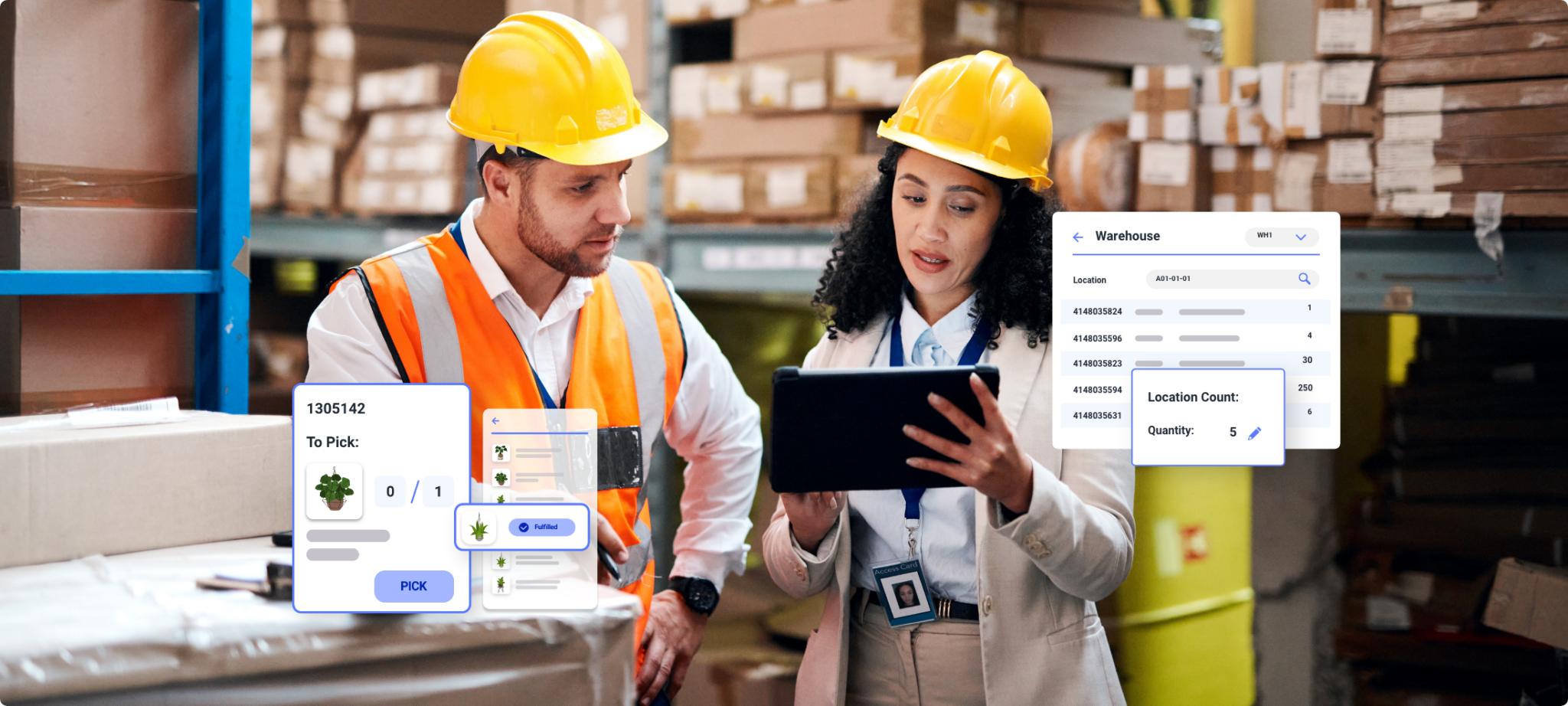
Inventory management savings calculator
Uncover the cost of your mis-ships, out of stocks and lack of labor efficiency with our inventory management savings calculator.
Intelligent workflow automation
Look beyond basic automation. A top-tier OMS should offer a customizable rules engine that puts you in control. For example, JAF Comics, a leading retailer of action figures and memorabilia, switched from a manual, spreadsheet-based process to Linnworks’ automated multichannel order management system and managed to 10x their business growth. This is the level of impact that intelligent automation can have, separating a good OMS from a great one.
Integrated shipping management
An effective OMS should have deep, native integrations with major shipping carriers. This allows you to print shipping labels directly from the platform, automatically compare rates to find the most cost-effective service for every order, and send tracking information back to the sales channel and the customer without manual data entry.
Integrated POS functionality
If you operate physical stores or pop-up shops alongside your online channels, integrated Point of Sale (POS) functionality is crucial. When a sale is made in-store, the OMS should instantly deduct the item from your global inventory count. This real-time sync between offline and online sales is the only way to maintain perfect inventory accuracy and prevent overselling.
Robust reporting and analytics
The best decisions are data-driven. Your OMS should provide easy access to dashboards and reports that cover every aspect of your operations. This includes sales trends by channel, best-selling products, fulfillment costs and times, and team member productivity. These analytics are vital for optimizing your business for profitability.
Extensive channel and system integrations
Your OMS must be able to connect seamlessly with all the other tools in your tech stack. Prioritize platforms that offer a wide range of pre-built, native integrations with the major e-commerce platforms (Shopify, BigCommerce), marketplaces (Amazon, eBay, Walmart), shipping carriers, and accounting software you already use. A lack of proper integration can create data silos and manual work, defeating the purpose of the system.
How multichannel order management works, step by step
A multichannel order management system coordinates every stage of the order lifecycle, from the moment a customer order arrives to the point it is delivered or returned.
Understanding how each stage works makes it easier to see where an order management system removes manual effort and protects the customer experience.
Here is how a typical order moves through the system, step by step.
Order capture and order entry
Every sales order is captured automatically as soon as a customer places it, whether the sale happens on your ecommerce platform, an online marketplace, or a point of sale in a physical store. Instead of manual order entry across separate systems, the order management system pulls each customer order into one centralized queue with all the details attached.
Cross-channel inventory syncing
The moment an order is captured, the system updates inventory levels across every connected channel in real time. This cross-channel inventory management keeps stock counts accurate everywhere you sell, so a sale on one marketplace instantly reflects on the others.
Strong inventory tracking and inventory control at this stage are what prevent overselling and backorders.
Ecommerce automation 101
Discover how ecommerce automation can free up your team and eliminate daily chaos in your online business.

Order routing and fulfillment logic
Once an order is ready to ship, intelligent order routing decides the best place to fulfill it. The order management system can automatically assign each order to the optimal warehouse, 3PL, or store based on rules you set.
This routing logic is central to efficient order fulfillment: it shortens delivery times, lowers shipping spend, and keeps the order fulfillment process consistent even across multiple locations and high order volumes.
Automation rules and workflows
Automation rules are the engine that ties every stage together. Within the order management system, you can build workflows that trigger actions automatically: flagging high-value orders, applying the cheapest shipping carrier, generating purchase orders when stock runs low, or holding orders that need review. These automation rules replace repetitive manual work, reduce errors, and let your team focus on exceptions rather than routine order processing, driving real operational efficiency as you scale.
Returns handling and reverse logistics
The order lifecycle does not end at delivery. Effective returns handling is a core part of any complete order management system, and it is often where the customer experience is won or lost. A good platform streamlines reverse logistics by generating return labels, tracking returned items back into inventory, and triggering refunds or exchanges automatically. Because returns are tied to the same inventory and order status data, stock is corrected instantly, and customer support has full visibility into every returned order.
Order tracking and status updates
Throughout the journey, real-time order tracking keeps everyone informed. The order management system updates order status at each step and pushes tracking information back to the sales channel and the customer automatically. This visibility reduces customer support tickets, sets clear expectations, and reinforces a dependable customer experience, giving you and your customers a single source of truth for every order from checkout to delivery.
How to choose the right OMS for your business
Selecting the right order management software is a critical decision. To find the best fit, start by evaluating your own operational needs. Use this checklist to clarify your requirements, especially if you’re selling across multiple sales channels:
- How many sales channels are you on? List every marketplace, ecommerce platform, and retail location where you sell products.
- What is your average daily/monthly order volume? Be honest about your current volume and projected growth over the next 1-2 years.
- Do you manage inventory in multiple locations? Account for all warehouses, 3PLs, retail stores, and FBA centers.
- What does your order fulfillment process look like? Do you ship in-house, use a 3PL, rely on dropshipping, or use a hybrid model?
- What other software do you need to integrate with? Consider your accounting software (like QuickBooks or Xero), CRM, and any other essential business tools.
It’s also important to understand the difference between an OMS and a full Enterprise Resource Planning (ERP) system. While ERPs can manage orders, they are massive, complex systems that also handle functions like HR, manufacturing, and corporate finance. For most ecommerce brands, an OMS is the more practical, focused, and cost-effective choice for mastering multichannel commerce.
4 steps to a smooth OMS implementation
Transitioning to a new system can feel daunting, but a structured approach can ensure a smooth and successful implementation.
- Clean and standardize your data: An OMS runs on data. Before you begin, take the time to clean up your product information (SKUs, titles, attributes) to ensure it’s consistent across all channels. Remember the “garbage in, garbage out” principle; clean data is the foundation of effective automation.
- Run in parallel: Don’t turn off your old system on day one. For a short period, run your new OMS alongside your existing processes. This allows you to test the new workflows with live orders and confirm everything is working correctly before making the final switch.
- Create training resources: Empower your team for success. Develop simple guides, checklists, or short video tutorials for common tasks within the new system. A well-trained team will adapt faster and unlock the full potential of the software much sooner.
- Integrate and automate: Once the system is live, connect all your channels and software. Work with your implementation team to identify the most impactful processes to automate from day one, such as order routing and shipping label generation, to see an immediate return on your investment.
Take control of your growth with Linnworks
Adopting a multichannel order management system is a pivotal step for any brand that is serious about growth. It transforms your operations from a chaotic, reactive process into a streamlined, automated engine for efficiency and customer satisfaction.
With over 100 native integrations and a focus on powerful, flexible automation, Linnworks is built to handle the complexities of modern commerce and help you take complete control of your business. It provides the single source of truth you need to scale confidently, without limits.
Ready to see how Linnworks can transform your operations? Request a demo today.
Get a Linnworks demo – automate inventory and orders faster
Book a Linnworks demo and see how it simplifies inventory, orders, and fulfillment. Get started today and optimize your eCommerce operations.

FAQ
What is an order management system (OMS)?
An order management system (OMS) is a centralized software platform that manages the entire order lifecycle across every sales channel, from order entry and order processing to order fulfillment and order tracking. A modern order management system unifies inventory, sales orders, and customer information in one place, giving you real-time inventory updates, accurate order status, and full control over order routing as your order volume grows.
How does order management software improve inventory management?
Order management software improves inventory management by keeping inventory levels synced in real time across every channel. Instead of manually managing orders on spreadsheets, the system automatically applies inventory updates the moment a sale happens, so inventory tracking stays accurate and overselling is eliminated. This inventory control also supports multi-location inventory management, giving large enterprises and growing brands a single, reliable view of stock.
What features should I look for in the best order management software?
The best order management software combines centralized order management, real-time inventory tracking, intelligent workflow automation, and integrated shipping and fulfillment. Look for an order management system that offers flexible order routing, robust reporting, POS functionality, and extensive integrations with your ecommerce platform and other tools. These features drive operational efficiency, improve the customer experience, and make managing orders at scale far simpler.
Who needs a multichannel order management system?
Any business selling on more than one channel benefits from a multichannel order management system. If you sell across an ecommerce platform, online marketplaces, and physical stores, and your order volume is outgrowing manual order processing, an OMS platform brings every customer order into one dashboard. It suits growing brands and large enterprises alike, and pairs well with your accounting and customer support tools to keep operations running smoothly.
What is the difference between an order management system and inventory management software?
Inventory management software focuses mainly on tracking stock and inventory levels, while an order management system covers the full order lifecycle, including order processing, order routing, order fulfillment, and order tracking. A strong order management system includes inventory management as one part of a broader platform, so you get inventory control and complete order status visibility together rather than juggling separate tools.